
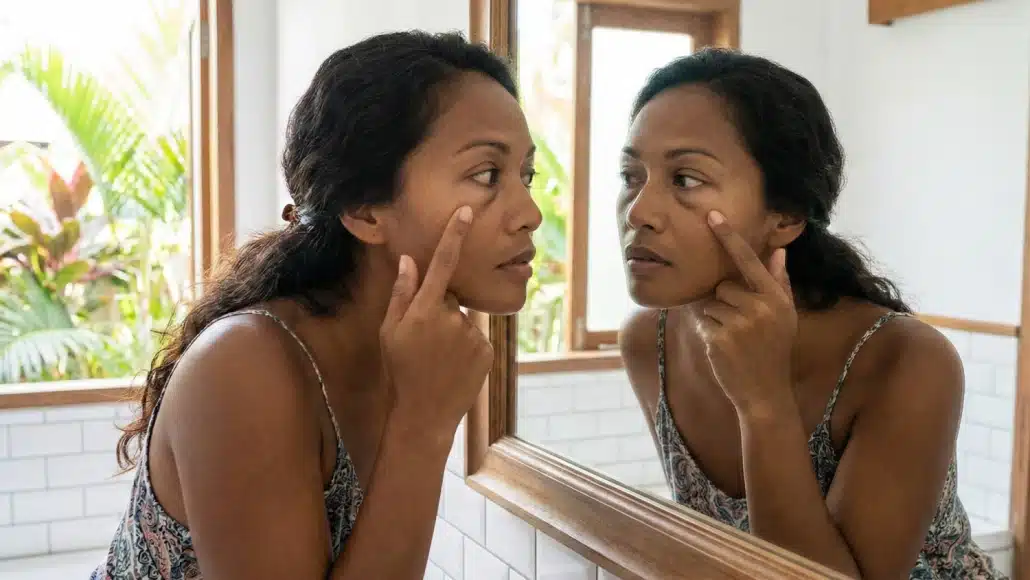
Are Your Eyes Looking Puffy?
How to Tell if It’s Allergies or Fat Pads
Dealing with puffy eyes can be frustrating, especially when you’re not sure what’s causing the problem. Whether you live in Oahu or anywhere else in Hawaii, puffy eyes can result from common allergies—like pollen, dander, or volcanic smog (VOG)—or from lower eyelid fat pads.
Understanding the source of your puffiness is key to choosing the best solution.
Understanding the Causes of Puffy Eyes
 Puffy eyes are a frequent cosmetic concern for people of all ages and body types. Swelling around the eyes can create a tired or aged appearance, even when you’re well-rested.
But what’s really behind the puffiness? The two most common causes are allergies and lower eyelid fat pads.
1. Allergies
Allergies are among the leading causes of eye puffiness in Hawaii, where the air can be filled with pollen, dust mites, pet dander, and VOG. Allergic reactions cause the body to release histamines, which lead to swelling, redness, and itchiness around the eyes.
If your puffiness fluctuates throughout the day or gets worse in certain environments, allergies may be the culprit.
2. Lower Eyelid Fat Pads
Fat pads are a natural part of your facial structure. As you age, these pads may become more prominent due to genetics, gravity, or the weakening of supporting tissues. Lower eyelid fat pads don’t usually fluctuate from day to day and tend to remain even when allergy symptoms are absent. If your puffy eyes persist regardless of the season or environment, the fat pads may be to blame.
How to Tell the Difference
If you’re unsure whether allergies or fat pads are behind your puffy eyes, try these simple self-tests:
- Allergy Medication Test: Take an over-the-counter allergy medication. If your puffiness improves, allergies are likely to blame. If there’s no change, fat pads could be the cause.
- Upward Gaze Test: Look upward in a mirror. If the puffiness becomes more pronounced, it’s often due to lower eyelid fat pads.
- Palpation/Pressure Test: Gently apply pressure to your closed eyelid. If a bulge is more noticeable, fat pads may be present.
Treatment Options for Puffy Eyes

1. For Allergies
Managing allergies can significantly reduce puffiness. Common strategies include using antihistamines or allergy eye drops. It also helps to keep windows closed during high pollen seasons, use air purifiers indoors, and wash your face and hands after being outdoors.
2. For Lower Eyelid Fat Pads
If fat pads are the culprit, options are more limited. Non-surgical treatments, like dermal fillers, can sometimes camouflage the appearance, but they come with risks such as swelling, migration, and complications for future surgery. The gold standard for treating fat pads is lower eyelid surgery, also known as blepharoplasty.
Prevention Tips to Reduce Eye Puffiness
- Get tested for allergies to identify and minimize triggers.
- Maintain a healthy lifestyle and sleep schedule.
- Use cold compresses to reduce morning puffiness.
- Protect your eyes from irritants such as smoke and strong winds.
Eye Surgery to Solve Puffiness
The best facial plastic surgeons, like Susan Tan, MD, founder and medical director of Hawaii Facial Plastic Surgery, use a transconjunctival, or scarless, technique for lower eyelid surgery. It preserves the eye’s natural support structures, minimizing the risk of changing the eye’s shape.
Recovery after blepharoplasty typically takes 1-2 weeks and may involve temporary swelling and bruising. While surgery is highly effective, it’s important to consult with an experienced surgeon to discuss risks and benefits.
Puffy eyes can be a nuisance, but identifying the cause is the first step toward finding the right solution. Whether you’re dealing with allergies, fat pads, or both, effective treatments are available. Consult with a medical professional to create a personalized plan for a refreshed, youthful appearance.
FAQ: Common Questions About Puffy Eyes
Q: Can allergies and fat pads occur together?
A: Yes. Some people have both allergies and prominent fat pads, which can worsen puffiness. Treating allergies may help, but surgical intervention might still be needed for fat pads.
Q: Are there any home remedies for puffy eyes?
A: Cool compresses, elevating your head while sleeping, and using allergy medications can help with puffiness caused by allergies. For fat pads, home remedies are generally ineffective.
Q: Is lower eyelid surgery safe?
A: When performed by an experienced, board-certified facial plastic surgeon, lower eyelid surgery (blepharoplasty) is generally safe and effective. Complications are rare but should be discussed during your consultation.
Q: How do I know if I need surgery?
A: If non-surgical treatments don’t reduce your puffiness and it persists year-round, a consultation with a facial plastic surgeon can determine if surgery is appropriate.
Q: Will insurance cover lower eyelid surgery?
A: Most insurance plans do not cover cosmetic surgery. However, if the puffiness impairs your vision, some coverage may be possible. Check with your provider and surgeon’s office for details.

